
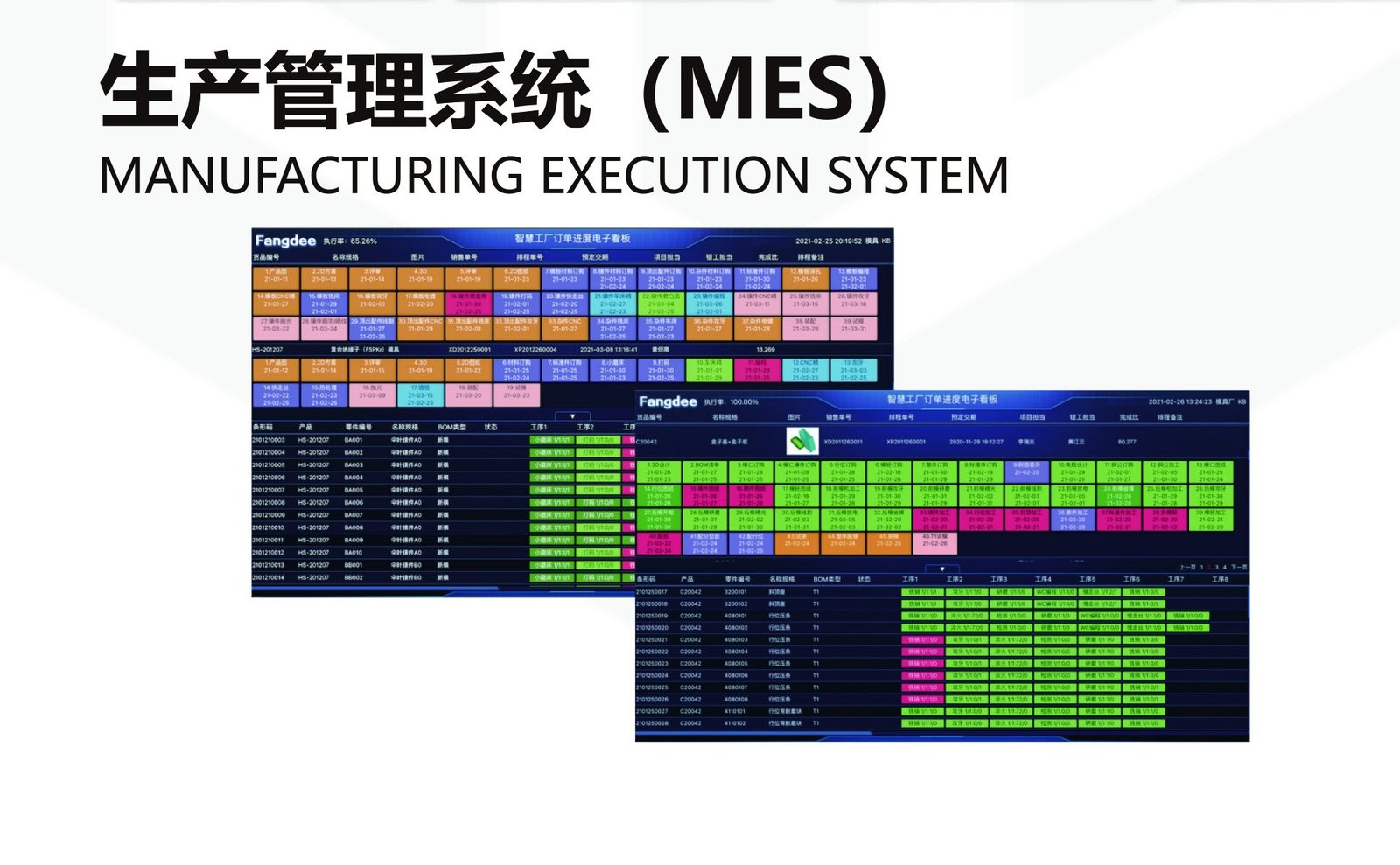
- MES/ERP traceability from raw material to operator.
- XRF verification links material to its cert.
- MOQ 1 piece, lead times of roughly 3 / 7 / 30 days.
- ISO 9001 · IATF 16949 · ISO 14001.
How do I start a traceable machining project?
The answers below cover the essentials for you sourcing CNC machining. If your question is not listed, email [email protected] and ask directly.
What does traceability record?
Raw material source and lot, machine, operator, process parameters, production batch, machining time, and inspection results — captured per lot in our MES/ERP system. The lot number travels with the part through every operation, so any single part can be traced back to its origin. Ask for the record set you actually need; we do not pad the file with documents nobody reads.
Why does traceability matter for recalls?
A recall costs least when you can name the bad lot. With lot-level records you quarantine one batch and keep shipping; without them you quarantine everything and stop the line. The XRF check against the mill certificate at goods-in is what makes that boundary defensible — it is a test result, not a supplier's claim.
What tolerances and materials do you work with?
±0.003 mm on CNC milling, ±0.002 mm on CNC turning, ±0.002 mm on precision grinding; critical characteristics start at initial Ppk ≥ 1.67 and are held to Cpk ≥ 1.33 in production, general characteristics at ≥ 1.33, each reported per feature. Materials: aluminum, stainless, carbon and alloy steel, brass, copper, titanium (TA2 / TC4), magnesium, and ABS/POM/nylon/PTFE/PEEK/Delrin. Titanium stress relief above 500 °C is outsourced to a qualified partner, which we state honestly rather than gloss over.
How does documentation work?
Tell us on the PO which documents travel with the shipment — mill certificate, per-feature capability report, CMM data, SPC charts — and we build the file as the job runs, not after it ships. Records come out of the MES/ERP lot history, so what you receive is what was actually measured. Our ISO 9001:2015 (116024/A/0001/UK/En), IATF 16949:2016 (131941/A/0001/SM/En, excluding Clause 8.3 design), and ISO 14001:2015 certificates are available on request.
How do payment and shipping work?
Quote against the drawing, then PO — we build to print, so changes to the print are your call, not ours. Say on the PO which lot records ship with the parts; we attach what you asked for and nothing invented on top. Parts leave No. 8, Shuibian Songyuan Road, Hengli Town, Dongguan, Guangdong, China 523470. Email [email protected] or call +86 13126536955 for terms and freight on your order.
Which materials and industries do you cover?
We machine aluminum, stainless steel, titanium, brass, copper, and Inconel, plus engineering plastics including PEEK and Delrin. These CNC milling services go into medical, aerospace, automotive, robotics, electronics, and defense applications, with the inspection, traceability and documentation each sector requires before it places an order.
What buyers ask most
Three questions come up on nearly every enquiry. What is the minimum order? One piece - a single prototype can be machined, checked and iterated before any volume is committed. What is the lead time? Roughly 3 / 7 / 30 days depending on the material and the documentation scope, from a simple aluminium part to a full first-article package. What tolerances can you hold? ±0.003 mm milled and ±0.002 mm turned, verified on a Hexagon CMM, with Ppk 1.67 or better initial and Cpk 1.33 or better in production on critical characteristics. The answers are short because the capability is specific, not vague.
The answers behind the answers
The plant behind these answers is Dongguan Zhuohang Ltd - 6,800 m² in Hengli Town, Dongguan, 100+ CNC machines including Mazak VARIAXIS I-600 and INTEGREX I-250H S, and certification to ISO 9001:2015, IATF 16949:2016 and ISO 14001:2015 with the certificate numbers published and verifiable. The service area covers Austria, Belgium, the Czech Republic, Denmark, France, Germany, Greece, Hungary, Ireland, Italy, the Netherlands, Spain, Sweden and the United Kingdom in Europe; Brazil, Canada, Mexico and the United States in the Americas; China, Israel, Japan, Singapore and Sri Lanka in Asia; Australia and New Zealand in Oceania; and South Africa in Africa, with worldwide shipping from Dongguan. Contact Felipe Iglesias at [email protected] or +86 13126536955 with a drawing and a quantity for a specific answer to your specific part.
The evidence behind the numbers
Ask for proof and the answer is specific: Dongguan Zhuohang Ltd runs 100+ CNC machines on a 6,800 m² floor in Hengli Town, Dongguan, including the Mazak VARIAXIS I-600 five-axis, the INTEGREX I-250H S mill-turn, Brother SPEEDIO, and TSUGAMI, STAR and CITIZEN Swiss lathes. Inspection runs on a Hexagon CMM with the 10:1 gauge rule, and ISO 9001:2015, IATF 16949:2016 and ISO 14001:2015 are held by verifiable certificate number. Critical characteristics are tracked with Ppk 1.67 initial and Cpk 1.33 in production - a tolerance quoted here is a tolerance held.
Buyers across Austria, Belgium, the Czech Republic, Denmark, France, Germany, Greece, Hungary, Ireland, Italy, the Netherlands, Spain, Sweden and the United Kingdom in Europe; Brazil, Canada, Mexico and the United States in the Americas; China, Israel, Japan, Singapore and Sri Lanka in Asia; Australia and New Zealand in Oceania; and South Africa in Africa are served from Dongguan with worldwide shipping. MOQ is 1 piece; lead times run about 3 / 7 / 30 days. Send the drawing and quantity to Felipe Iglesias at [email protected] or +86 13126536955 and the quote returns with the process spelled out.
What this shop actually runs
If you ask for capability evidence, you deserve a specific answer. This facility operates 100+ CNC machines across 6,800 m2 in Dongguan, China, staffed by 100+ people. The machines, listed by category:
- 5-axis machining centres (10+) - Mazak VARIAXIS I-600 (510/910/510 mm travel, 12,000 rpm, 22 kW, 71.6 N·m, 30-tool BT40) and Mazak INTEGREX I-250H S (B-axis 0.0001°, 24 kW, 124 N·m, 38-tool HSK-A63). Applied to compound-angle parts, single-setup multi-face prismatic work, and aerospace fittings where datum transfer loss is unacceptable.
- 3-axis / 4-axis machining centres (50+) - Brother SPEEDIO S500Z2N / S700Z2N (10,000 rpm, 14/21-tool ATC, 0.7 s tool-to-tool, Z-axis 2.2 G) and Mazak VCE-430A L / VCE-570C L (10,000 rpm, 118 N·m, 24-tool ATC). Applied to prismatic parts, plates, brackets, housings.
- Swiss-type turning centres (10+) - Citizen Cincom A20-3F7 (Φ20 mm, 10,000 rpm), TSUGAMI B0206-III / B0205-III (Φ20 mm, 0.1 µm), STAR SR-32JII / SR-32J Type N (Φ32 mm, 8,000 rpm). Applied to long, slender rotational parts at ±0.002 mm.
- CNC turning centres (20+) - HEADMAN T70M/1250 (720 mm swing, 117 mm bore, 3,000 rpm, BMT75 12-station turret). Applied to shafts, bushings, flanges up to ±0.002 mm.
- Wire EDM (5+) - Sodick AQ535L (550/350/300 mm travel, ±20° taper, 800 kg workpiece). Applied to hardened tool steel, internal splines, sharp internal corners that milling cannot reach.
- Inspection: Hexagon CMM + 20+ gauges - Hexagon CMM for coordinate measurement, plus vision system, profilometer, hardness tester, coating thickness gauge, XRF for material verification. The 10:1 rule (gauge 10x more accurate than the band) is applied to every feature.
- Machine highlights - VARIAXIS I-600: one-setup multi-face 5-axis + MAZA-CHECK auto-calibration; INTEGREX I-250H S: DONE-IN-ONE mill-turn, B-axis 0.0001° + Ai thermal shield; SPEEDIO S500Z2N / S700Z2N: Z-axis 2.2 G + 0.7 s ATC; Swiss-type: guide-bush switchable + 0.1 µm resolution.
Tolerance bands: ±0.003 mm milled, ±0.002 mm turned, ±0.002 mm ground or wire-cut. Capability indices: Ppk >= 1.67 at the initial study; Cpk >= 1.33 ongoing in production.
Certifications: ISO 9001:2015 (116024/A/0001/UK/En) · IATF 16949:2016 (131941/A/0001/SM/En, design clause 8.3 excluded) · ISO 14001:2015 (116024/B/0001/UK/En), held by Dongguan Zhuohang Ltd (USCC 91441900MA4UWT6X39, since 2005).
Service area: we supply Austria, Belgium, the Czech Republic, Denmark, France, Germany, Greece, Hungary, Ireland, Italy, the Netherlands, Spain, Sweden and the United Kingdom in Europe; Brazil, Canada, Mexico and the United States in the Americas; China, Israel, Japan, Singapore and Sri Lanka in Asia; Australia and New Zealand in Oceania; and South Africa in Africa, with worldwide delivery from China.
Contact: Felipe Iglesias, [email protected], +86 13126536955.
Send your drawing for a quote.
Email [email protected] or call +86 13126536955 for a review and quote.
Frequently Asked Questions
1. How do I start a traceable machining project?
In short, Send the drawing and state on the PO that you need lot traceability, along with which records you want back — material certificate, inspection results, or the full parameter log. Traceability is cheap to build in at quoting time and expensive to reconstruct after the fact, so say it up front.
2. What does traceability record?
In short, Raw material source and lot, machine, operator, process parameters, production batch, machining time, and inspection results — captured per lot in our MES/ERP system. The lot number travels with the part through every operation, so any single part can be traced back to its origin.
3. Why does traceability matter for recalls?
In short, A recall costs least when you can name the bad lot. With lot-level records you quarantine one batch and keep shipping; without them you quarantine everything and stop the line.
4. What tolerances and materials do you work with?
In short, ±0.003 mm on CNC milling, ±0.002 mm on CNC turning, ±0.002 mm on precision grinding; critical characteristics start at initial Ppk ≥ 1.67 and are held to Cpk ≥ 1.33 in production, general characteristics at ≥ 1.33, each reported per feature. Materials: aluminum, stainless, carbon and alloy steel, brass, copper, titanium (TA2 / TC4), magnesium, and ABS/POM/nylon/PTFE/PEEK/Delrin.
5. How does documentation work?
In short, Tell us on the PO which documents travel with the shipment — mill certificate, per-feature capability report, CMM data, SPC charts — and we build the file as the job runs, not after it ships. Records come out of the MES/ERP lot history, so what you receive is what was actually measured.
6. How do payment and shipping work?
In short, Quote against the drawing, then PO — we build to print, so changes to the print are your call, not ours. Say on the PO which lot records ship with the parts; we attach what you asked for and nothing invented on top.
What is traceability in CNC machining?
Traceability is the record of where every part came from — raw material lot, machine, operator, batch, and inspection results. It lets you contain a problem to a specific lot instead of quarantining your entire inventory.
What does your traceability system record?
Our MES/ERP system records raw material source and usage, process parameters, machine data, production batch, machining time, operator, and inspection results on every lot, so any part can be traced back to its origin.
How do you trace a part to its material?
Every incoming lot is XRF-verified against its mill certificate before it reaches a machine, and the lot number travels with the part through every operation. If a non-conformance surfaces, we isolate exactly which lot was involved.
What tolerances can you hold?
In short, ±0.003 mm on CNC milling, ±0.002 mm on CNC turning, and ±0.002 mm for precision grinding. We verify critical dimensions on Hexagon CMMs, with process capability Ppk ≥ 1.67 at the initial study on key characteristics and Cpk ≥ 1.33 on general characteristics.
Are you certified?
Yes. We hold ISO 9001:2015, IATF 16949:2016, and ISO 14001:2015. IATF 16949 scope excludes product design under Clause 8.3, so we are a build-to-print manufacturer.
What is your minimum order quantity?
Our MOQ is 1 piece. We take prototype and single-part orders as well as production runs, so you can validate a design before committing to volume.
How do I get a quote?
Email your STEP, IGES, or 2D drawing to [email protected]. We return a review and a quote, usually within one business day, and we flag any feature that would drive up cost before you commit.
When should I choose milling over turning for my part?
In short, Milling is the right call when the part is prismatic, plate-like, or carries features on more than one face — a bracket, housing, or manifold. Turning owns bodies of revolution such as shafts and bushings.
What lead time should I expect for a complex milled part?
In short, Lead time tracks complexity: 3 days for simple, 7 for standard, and 30 for complex parts. A one-off complex part still needs the 30-day window, because complexity, not volume, drives the schedule.
How do I know the tolerance on my drawing is achievable?
In short, Send the drawing and we will flag any feature that fights the process — a wall too thin to mill, a tolerance tighter than ±0.003 mm that needs grinding, or a datum that cannot be established on the part. Because we are build-to-print under IATF 16949 (Clause 8.3 excluded), we do not redesign; we tell you what the part needs to be makeable.
7. Which materials and industries do you cover?
In short, We machine aluminum, stainless steel, titanium, brass, copper, and Inconel, plus engineering plastics including PEEK and Delrin. These CNC milling service go into medical, aerospace, automotive, robotics, electronics and defense applications, with the inspection, traceability and documentation each sector requires before it places an order.
What payment methods and terms do you accept?
PayPal, Western Union, and bank or wire transfer. For long-term customers we also accept Net 30, Net 45, and Net 60 terms after an approved credit review.
What happens if a machined part has a manufacturing defect?
We provide free repair or remake for parts with manufacturing defects. All repair and remake costs, including return and shipping, are on us.
How quickly do you respond to inquiries?
We respond to every inquiry within 24 hours. Quotations for standard parts are returned within 48 hours; print reviews and DFM feedback are usually back within one business day.
Standards referenced on this page
- ASTM B348/B348M-21 — Standard Specification for Titanium and Titanium Alloy Bars and Billets
- ASTM B211/B211M-19 — Standard Specification for Aluminum-Alloy Rolled or Cold Finished Bar, Rod, and Wire
- ISO 9001 — Quality management systems — Requirements